
WWF Wrestlemania Arcade Gameplay
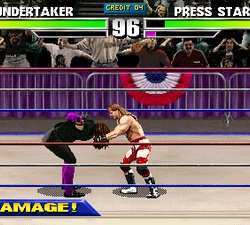
One second to the bell—and WWF WrestleMania: The Arcade Game on Sega smacks your temples with rhythm. The clock ticks, the crowd hums, health bars twitch under the opening punches. This isn’t a thoughtful sim: arcade WrestleMania sweeps you into a groove where every step is a provocation, every rope rebound a chance to snap a blistering combo and earn a living-room pop. WrestleMania Arcade feels like a fight-party: turnbuckle dives, clangy hits, flashy specials—and you stop counting inputs, just catching the beat as if the pad itself is steering you into the next move.
The ring’s rhythm and the ticking clock
The match opens simple: step left, feint, check the block. A heartbeat later your rival is sprinting at the ropes, springing back—either slamming you like a freight train or eating an uppercut you’ve set half a body out. The timer up top hungrily chews seconds, and you feel it: decisions get shorter, the duel tighter, mistakes pricier. On the Sega Mega Drive the flow nudges you to play forward—don’t plant, close space, clip legs, punch the air out in bursts. The secret is that swing between safe scouting and split-second madness, when you suddenly flip the switch to offense and don’t let go until their life bar visibly melts.
The ring’s a small arena with no exits, but plenty of character. Ropes act like springs: catch the moment and you’ll sling a charismatic giant into flight, then snap back yourself and drop an elbow. Corners have their own rush—corner jumps reward anyone with timing with an almost free thunder-drop. But don’t relax: block saves, and any yawn gets punished by an instant steal. When you learn to read the wind-up, the first note of a signature strike—the real duel begins, less “who mashed faster” and more “who heard the ring’s rhythm better.”
Signature flair and arcade magic
This is WWF wrestling-as-arcade, where realism isn’t king. WrestleMania Arcade loves the show: The Undertaker hurls hungry souls, Doink the Clown suddenly pulls a sledgehammer, Shawn Michaels leaves a sweet trail of hearts after a flurry, and somebody’s steel arm cracks so hard the speakers shake. These specials wink at fans—recognizable bits that break the usual trade of blows. And no, they’re not about balance; they’re about spectacle. Pick your favorite, seize a window, and turn the bout into a set piece that makes the living room applaud. But get carried away and a brutal counter lands—Arcade WrestleMania won’t forgive a high chin; risk it, own it.
Combos are the heart. Not endless blenders, but short, juicy strings: two quicks into a grab into a toss; sweep, pop-up, diving elbow; fake, sprint, running strike. You get used to having a sliver after a rope bounce to choose: keep the pressure or bail to bait a whiff. With every match your motions clean up: first by luck, then by ear, then by muscle memory on the pad. There are anti-airs, launchers, and that pure joy when you snag them midair with a third hit and plant them clean, right under the roar of the crowd.
Tournament, titles, and pressure
Solo is a ladder of matches with a goal as clear as day: first the Intercontinental strap, then the big belt. WWF WrestleMania: The Arcade Game ramps you up rung by rung: straight duels at first, then the heat—two-on-one, sometimes three-on-one. That’s when the timer feels like a whip and every mistake like an ankle weight. You start thinking in angles, keeping your back to the rope, fishing for quick pokes and bailing before you’re penned in the corner. It isn’t punishment gloom—it’s thrill: survive, hang on, shave another millimeter off each health bar and close it out in the next scrap.
And at home on Sega it’s especially tasty in two-player. WrestleMania Arcade in local multiplayer is pure laughs and smack talk: today you’re shoulder to shoulder against waves of stars, tomorrow you’re testing each other in a stubborn head-to-head. Same rules, same timer, but a different current in your hands when your friend sits beside you and you just know he’s about to climb into the corner—while you’re already holding the counter. Easy to hop in, friendly early rounds, and a prize for anyone who stays on beat longer—that’s the design: arcade, noisy, homely.
Small habits that build mastery
First you learn to respect block, then to hold spacing to provoke a whiff. You start reading silhouettes: see that shoulder hitch—short poke incoming, time to answer; catch him eyeing the ropes—expect the sprint and meet it with a sweep. On Sega it’s all tied to tempo, and the best advice is: don’t turtle. Get loose—shimmy forward-back, sell the grab, then at the last blink flip to a corner jump. And never forget each fighter’s quirks. This WWF wrestling arcade is rich with personality: a signature isn’t just damage, it’s an applause button—and it’s always satisfying to press.
Nostalgia here isn’t in pixels or numbers. It’s in how WrestleMania Arcade makes you believe every round is a show. In how the timer goads your courage, how a duel turns into a ninety-second story where you’re hero, sly fox, and hammy villain by turns. And the moment the bell hits again, your hand’s back on Start, because arcade WrestleMania on Sega nails the one thing that matters: it holds you tight and won’t let go until you’ve taken your belt and dropped the gamepad to your knees with a satisfied, "now that was a match."