
WWF Wrestlemania Arcade story
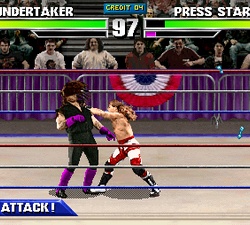
WWF WrestleMania: The Arcade Game didn’t start life on a couch in front of a TV — it was born under the roar of the arcade, parked between bone-rattling cabinets in the vein of Mortal Kombat and NBA Jam, a gleaming box blazing with the WWF logo. Around here we called it all sorts of things: Arcade WrestleMania, WWF WrestleMania Arcade, or just “that WWF arcade brawler.” Whatever the nickname, it stuck in our heads as one thing: shamelessly flashy, cheeky, and nothing like the televised matches. Midway bottled the spectacle and cranked it to 11: not a dry sim, but pure arcade heat with digitized sprites of real wrestlers — every move, every hit a TV broadcast frame, just overcranked.
The Chicago team literally built the game around people. They flew WWF stars into the studio and captured them move by move. That “digitized wrestler” shoot gave it the juicy, unmistakable look we loved: Shawn Michaels springs like a coil, The Undertaker summons the beyond with spooky effects, Doink the Clown whips out circus tricks — and it all plays less like a simple game and more like a show, the camera always right in the sweet spot. The cabinet boomed with voiceovers, the crowd pops set the tone, and on-screen you got the WrestleMania you’d watch and rewatch like the night’s best highlights.
The secret was leaning into excess. Midway knew attractions: big sound, big gestures, big emotions. Instead of number-crunching holds, you got instant specials, monster uppercuts, and outlandish signature moves. The WWF license delivered familiar faces — Bret Hart, Razor Ramon, Yokozuna, Doink, Bam Bam Bigelow, Shawn Michaels, Lex Luger, The Undertaker — and Midway’s arcade philosophy sprinkled the spice so every bout felt like a prime-time clip. That’s how the nickname that stuck was born — “Arcade WrestleMania”: a nod that this wasn’t a TV tribute, but a standalone, unhinged thrill ride based on the show.
From cabinet to cartridge
When the coin-ops had their moment, Acclaim stepped in — and WrestleMania: The Arcade Game moved home, onto cartridges. On store shelves it was simply “wrestling on the Sega,” but behind that label sat a whole era. The port kept what mattered — that arcade snap and those recognizable faces. For many of us the Sega version became the one: flip the power switch and the living room becomes an arena, the WWF stings buzzing in your head while the screen flashes those gloves and The Undertaker’s black hat. It became a Saturday ritual in our neighborhoods: one grabs Razor, the neighbor locks in Bret, and it’s on — elbows, spin moves, shouting — whether you’re at a seaside guesthouse or at home with tea and cookies.
In the ’90s our games didn’t live by catalogs: someone hauled in a cart from a flea market, someone else had it “rented till Monday,” and somewhere a cabinet lurked in a cinema basement — the name WWF WrestleMania: The Arcade Game passed from mouth to mouth. That’s how the monikers stuck — “Arcade WrestleMania,” “WWF arcade wrestling,” “WrestleMania — Arcade.” Think back to those nights and you can almost hear Vince McMahon on commentary, feel those chilled fingers of a would-be King of the Ring while your eyes burn bright. The game clicked with everyone: WWF diehards with Shawn Michaels posters, and folks just hunting for a loud evening throwdown.
Why we loved it
Because it never pretended to be “serious sport.” This game is a party. More carnival than competition, and that’s why it feels so warm. Digitized wrestlers gave weight to every slam against the mat, and that swaggering arcade framing made everything instantly readable: here’s the throw, here’s the signature, here’s the exact Sunday-night TV moment. Some lived for the WrestleMania tournament, others for sudden-death 1v1s, but for most the magic was the feeling — the match turning into a story between two characters and your thumbs on the buttons.
And we loved its personality. Every wrestler had a “stage,” a tiny bit of theater — the clown’s grin, The Undertaker’s silent stare from under the brim, Bret’s squint that told you: it’s about to get pretty. That living picture worked for kids’ imaginations and for grown-up nostalgia. So years later, when you hear “WWF WrestleMania: The Arcade Game,” it’s not mode names that surface — it’s faces, and the phantom feel of a D-pad under your thumb.
How it spread worldwide
First came arcades, fairs, malls. Then it hit home shelves, from America to Eastern Europe. The Mega Drive release landed especially hard in our parts: kiosks that stocked football and Ninja Turtles suddenly showed a wrestling box, and the line for it formed faster than for soda. Bootleg runs, weekend swaps, scribbled notes — “grab Arcade WrestleMania,” “that WWF on the Sega.” The game didn’t need a pitch: familiar stars, crowd applause on intro, a tempo that never lets go. That’s how it flew — not as a glass-case collectible, but as part of a shared ritual: slot the cart, power the console, call a friend. Three simple steps and the evening’s already a win.
Today we talk about it with a grin and no caveats: Arcade WrestleMania is the distillation of an era when “turn it louder” was a rule of thumb and games chased not realism but an emotional punch. And yeah, in conversation it’s still “WWF WrestleMania Arcade,” “WWF arcade wrestling,” “WrestleMania — Arcade” — call it whatever makes your heart twinge. Because what matters in this story isn’t pixel count, it’s how fiercely we believed our Sega was hosting a real live show. And every time, we believe again.